Tipper and walking floor trailers both carry bulk loads. They look similar to the untrained eye and they share a lot of operational ground. But choosing the wrong one for the job — or, worse, contracting it without realising the difference — means jobs run late, drivers can't discharge, and customers stop calling. This is a working buyer's framework for picking the right one.
The mechanics: tipping vs moving floor
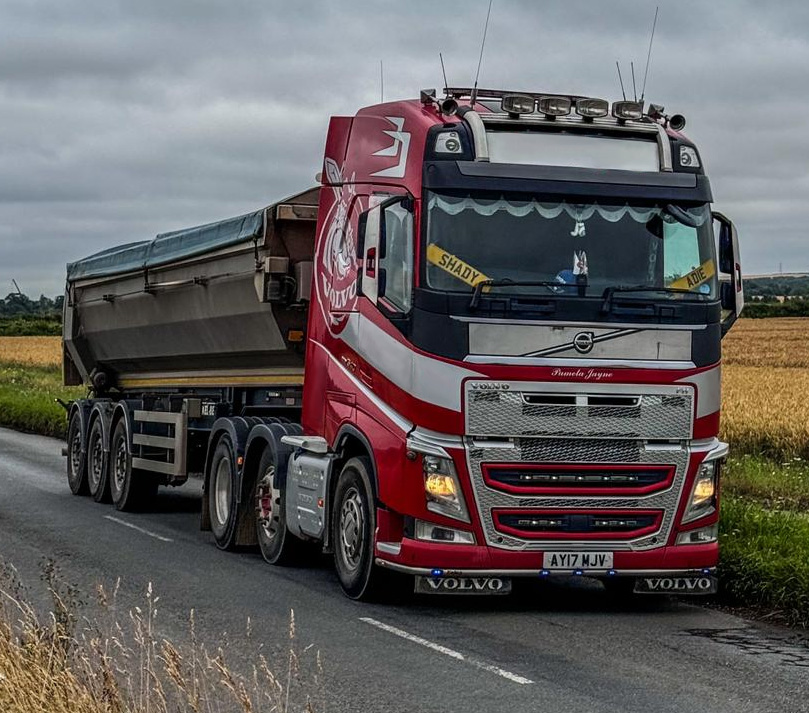
A tipper trailer discharges by raising its body around a hinge near the rear axle. The load slides out through the back, leaving a heap on the ground or into a hopper. It's quick — typically under two minutes for a full discharge — but it needs space above the trailer to raise the body and stable level ground to do it safely.
A walking floor trailer keeps the body horizontal. A hydraulic system drives aluminium slats in the floor back and forth, gradually walking the load out through the rear opening. The body never lifts. Discharge takes a bit longer, but the trailer can unload almost anywhere: indoors, on a slope, under low ceilings, into confined yards.
Load types: where each trailer wins
Tipper trailers are the standard choice for:
- Primary aggregates — stone, sand, gravel, ballast
- Sub-base products — Type 1, Type 3, MOT
- Crushed concrete and road planings
- Topsoil and landscaping material
- Any load destined for an open construction site or builders' merchant yard with overhead clearance
Walking floor trailers are the standard choice for:
- Waste-derived fuels (RDF, SRF) and biomass
- Recycled wood chip, paper, card, plastic
- Organic materials — compost, green waste
- Agricultural produce and feed in bulk
- Any load going into an indoor processing facility, MRF or waste transfer hall
- Loads that need to discharge gradually rather than in a single dump
Site access and discharge constraints
Site access is usually the single biggest factor. Before any contract is signed, walk through:
- Overhead clearance at the discharge point. A raised tipper body can reach 14–16 metres. Anything less and it's a walking floor job.
- Ground stability and gradient. Tipping on a slope is a genuine safety issue. Walking floor doesn't care.
- Indoor or outdoor discharge. Indoor delivery means walking floor every time.
- Yard space. A tipper needs room to manoeuvre with a raised body. Walking floor is a smaller footprint operation.
- Receiving equipment. A weighbridge or hopper at the receiving site may dictate one trailer type or the other.
Operational considerations
Beyond the load and the site, a few practical points often tip a decision:
- Loading speed. Tippers load fast from above. Walking floor trailers do too — they load through the same top opening — so loading rarely differentiates them.
- Discharge speed. Tipper wins for raw speed; walking floor is sometimes the only option that works at all.
- Driver workload. Tipping in tight yards needs concentration. Walking floor discharge needs less external assistance.
- Cleanliness between loads. Walking floor trailers benefit from a clean-out between unrelated loads — particularly when switching between waste and clean material.
- Trailer cost and availability. Walking floor trailers are more expensive and less abundant. Operators rate them differently.
When to use which: a simple framework
If the destination is an open construction site, a quarry yard or a builders' merchant with overhead room, tipper is almost always right. If the destination is indoor, confined, or a processing facility — and especially if the load is waste, biomass or organic — walking floor is almost always right.
Where it gets less obvious is recycled aggregate work. A load of recycled MOT going to an open construction site is a tipper job. The same material going into an indoor processing plant is a walking floor job. The load doesn't decide — the destination does.
Loaden Haulage operates both bulk tipper and walking floor capacity from a single Bedfordshire base. If you're not sure which is right for a specific lane, speak to the planning team — they will recommend based on the load and the destination, not on what is convenient to sell.