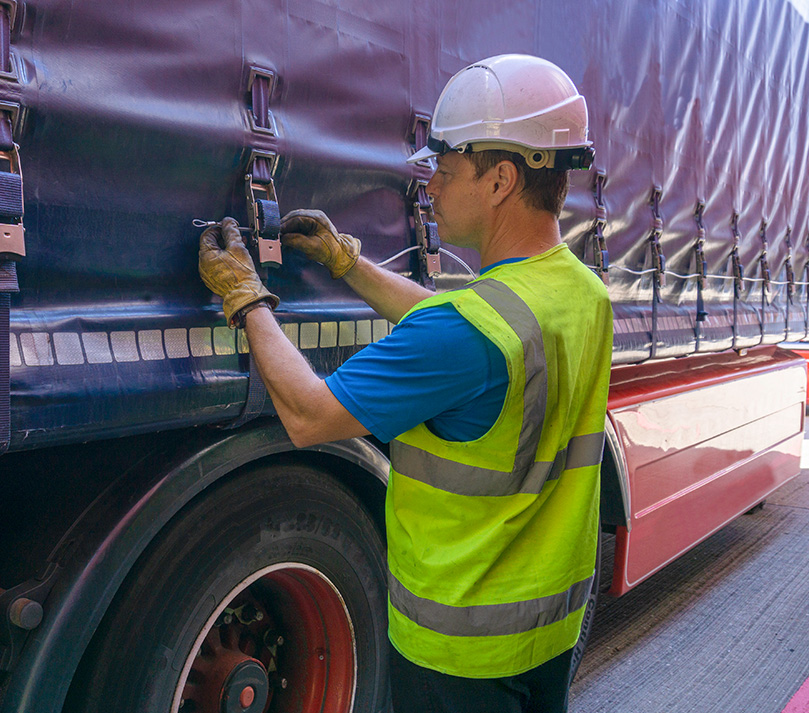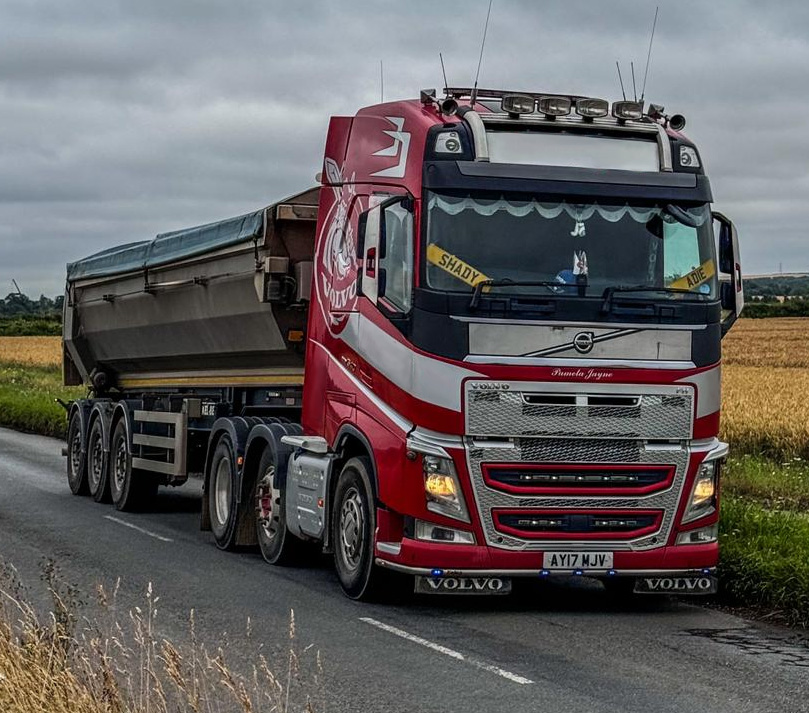
Walking floor haulage uses a moving-floor trailer to discharge its load mechanically, without the trailer body needing to tip. For the right loads, it is the only practical option — and for many UK waste and biomass operators, it is the only option that fits their site constraints. Here is when walking floor capacity makes sense, what it can carry, and how to evaluate a supplier.
How a walking floor trailer works
A walking floor trailer has a series of aluminium slats integrated into the trailer floor, driven by a hydraulic system that moves them back and forth in a controlled sequence. The motion gradually walks the load out of the open rear of the trailer, with the body itself remaining stationary throughout. A typical articulated walking floor trailer holds up to 90 cubic metres of material and can discharge in around three to five minutes, depending on the load.
The key contrast with a tipping trailer is that nothing is raised. A tipper rotates its body around a hinge near the rear, dumping the load out behind the vehicle. That requires stable level ground, generous overhead clearance — typically 14 metres or more — and a site where the operator can safely raise a 30-tonne-plus body without risk of contact with structures or other plant.
When walking floor beats a tipper
Walking floor capacity is the right choice whenever any of the following apply:
- The discharge point has restricted overhead clearance. Indoor waste-processing halls, biomass boiler buildings and confined waste-transfer yards rarely accommodate a tipper.
- The ground is uneven or sloping. Tipping on slope creates a stability risk. Moving-floor discharge does not.
- The load needs to leave the trailer gradually rather than in a single dump. Some processing plants meter the material as it is fed in.
- The driver is operating alone at the destination. Walking floor unloading needs less external assistance than tipping in a tight space.
- The load includes wet, sticky or compressible material that would not slide cleanly out of a tipped body.
Loads typically moved on walking floor
Walking floor trailers are used extensively across the UK waste, energy, agricultural and recycling sectors. Typical loads include:
- Waste-derived fuels — RDF, SRF and their compressed bale variants
- Biomass materials — wood chip, biomass pellets, recycled timber
- Organic materials — compost, green waste, processed manure
- Recycled paper and card — both baled and loose
- Agricultural produce and feed — grain, animal feed, root crops
- Glass cullet for re-melt
- Process feedstocks going into materials recovery, gasification or anaerobic digestion plants
Some operators also use walking floor trailers for recycled aggregates such as MOT, road planings and crushed concrete, particularly when the delivery destination cannot accommodate a tipping discharge.
The sectors using walking floor most
The largest users of walking floor capacity in the UK are:
- Waste management — moving material between waste transfer stations, MRFs, sorting facilities and energy-from-waste plants
- Biomass energy — fuel delivery into biomass-fired power generation and combined heat-and-power installations
- Agricultural supply chains — bulk feed, grain and seasonal produce
- Recycling — paper, glass and aggregate movements between processors
Each of these sectors has its own compliance, documentation and operational standards. A walking floor haulier serving them needs the appropriate waste-carrier licensing, driver training in site-specific procedures, and trailer configurations that match the load category being moved.
Choosing the right walking floor haulier
When evaluating a walking floor supplier, focus on:
- Trailer condition and roof configuration. A clean, well-maintained trailer with the right roof — tarpaulin or hard-top — is critical for both waste material and clean feedstock.
- Driver experience with waste sites. Walking floor discharge inside a confined waste-processing hall is a specific skill, not a generic HGV task.
- Documentation and waste-carrier credentials. Movements need to be recorded against the right waste transfer documentation, with audit traceability.
- Operational compliance. O-licence record, FORS-aligned standards, tachograph and drivers' hours discipline.
- Capacity flexibility. Can the supplier accommodate both contracted regular runs and ad-hoc cover when in-house capacity is short?
For waste, biomass and bulk operators in Bedfordshire and across the United Kingdom, Loaden Haulage operates walking floor capacity to all of these standards. To discuss a specific requirement, speak to the team — or read more about the walking floor haulage service.